Aggregators vs. Direct Bookings for Car Rental: Which Actually Pays Off
May 10, 2026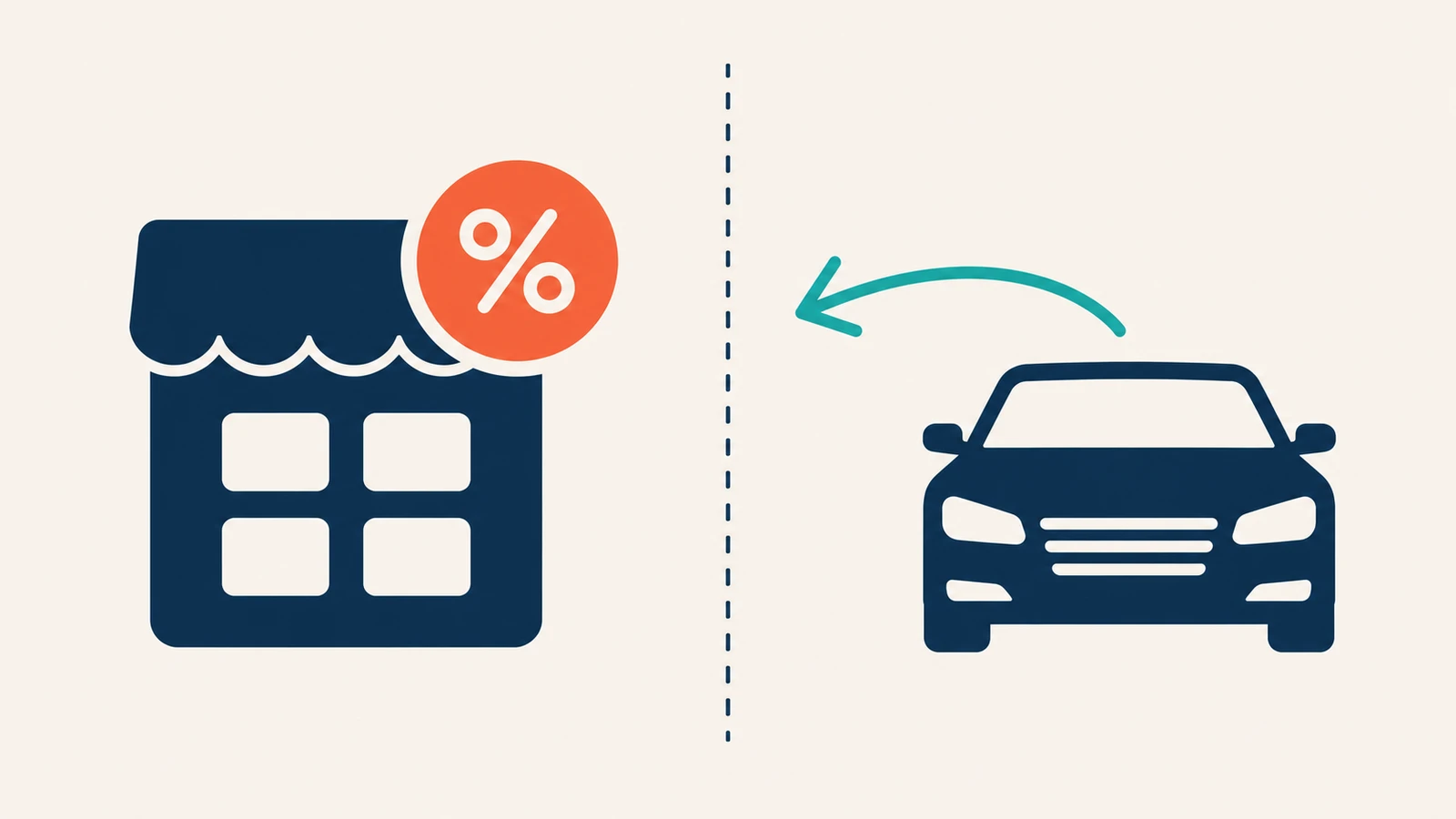
Aggregators and a direct booking channel aren’t competitors — they solve different problems, and the difference comes down to cost structure. An aggregator charges a commission on every single booking, forever, in exchange for solving cold-start traffic. A direct channel (Google Ads + AI sales agent + a converting site) costs money to build and run, but every booking it produces belongs to you with no per-deal cut — and in our own case, at $4–6 per qualified lead.
Here’s the actual trade-off, not the “pick one” framing most people default to.
What each one actually solves
| Aggregator | Direct channel | |
|---|---|---|
| Solves | Cold start — traffic from day one, no marketing needed | Ownership — a channel that’s yours, that compounds |
| Cost structure | Commission per booking, indefinitely | Setup cost + fixed monthly spend |
| Customer relationship | Belongs to the platform | Belongs to you |
| Speed to first booking | Immediate | Days to weeks (Google Ads launches in 5–7 business days) |
| Scales with volume | Cost scales linearly with bookings — more bookings, more commission paid | Cost stays roughly fixed as volume grows — more bookings, same spend |
Neither replaces the other. The question isn’t “aggregator or direct” — it’s whether you have a direct channel at all, alongside whatever aggregators you already use.
Why the cost structure matters more than the percentage
An aggregator’s commission is a variable cost tied to every transaction, forever. It doesn’t shrink as your volume grows — the tenth booking costs the same commission rate as the first. A direct channel is closer to a fixed cost: you pay for setup once and a management fee monthly, but that cost doesn’t rise proportionally with how many bookings come through it. Past a certain volume, the math flips in favor of owning the channel — every additional direct booking earns you full margin instead of margin minus a cut.
This is exactly the math our own ROI calculator walks through: a direct channel pays for itself after a specific number of direct bookings, and everything after that is profit with no commission attached.
What you give up by only using aggregators
- The customer relationship. The platform owns the contact, the review, and the repeat booking — not you.
- Pricing control. Aggregators often pressure rates down to stay competitive within their own marketplace.
- Compounding. A direct channel with SEO content and a growing reputation gets cheaper to run over time. An aggregator relationship doesn’t — the commission rate doesn’t improve because you’ve been a customer for two years.
- Data. You don’t see the full picture of who’s searching, what they’re comparing you against, or why they didn’t book — that stays with the platform.
What a direct channel actually requires
Not “build a website and hope.” It’s four connected pieces:
- Paid search (Google Ads) to capture people already searching for a rental in your city — see the full cost breakdown for Google Ads in car rental.
- An AI sales agent on WhatsApp so no request goes cold at 2am or during peak season.
- A site built to convert, not just to look good — a clear catalog and a booking path.
- SEO so some of that traffic arrives without a per-click cost at all.
Full breakdown of how these four pieces work together: how to attract car rental customers.
What this looked like for Vroom.DO
Vroom.DO launched in Punta Cana and Bávaro with zero bookings, no site, and no ad history — the exact position where aggregators usually look like the only option. Instead, the build combined search campaigns, an AI sales agent handling WhatsApp in four languages, and a multi-page site with a working catalog, all live from day one.
Result: a direct flow of qualified leads at $4–6 per lead, owned outright, with no aggregator commission on any of it. Full numbers in the Vroom.DO case study.
FAQ
Should I drop my aggregator listings once I have a direct channel? Not necessarily. Most rental businesses run both — aggregators for discovery and overflow, a direct channel for the bookings you’d otherwise pay a commission on. It’s an added channel, not a replacement.
How long until a direct channel pays for itself? It depends on your current volume and aggregator commission rate. Our ROI calculator walks through the breakeven math using your own numbers — most businesses see it pay off within the first few months of direct bookings.
Doesn’t a direct channel cost more upfront than just listing on an aggregator? Yes — an aggregator listing is close to free to start. That’s the trade-off: aggregators cost nothing upfront and a percentage forever; a direct channel costs money upfront and comparatively little afterward. Which is cheaper depends entirely on your booking volume.
What if I don’t have the volume to justify a direct channel yet? That’s a fair reason to start small — a Starter setup (Google Ads + AI sales agent on your existing site) is lower-commitment than a full site rebuild, and can run alongside your aggregator listings while you test demand.
Want the math run on your own numbers? Book a 15-minute call — we’ll look at your current aggregator commission and booking volume and estimate when a direct channel breaks even.